Every year, Earth Day is a reminder to appreciate our planet and natural resources, and to take action to care for them—but here at Hickman Woods, the Earth Day mindset is built into the work we do ALL YEAR LONG.
As a forester with Hickman’s, I have the privilege of seeing firsthand how responsible forest management, sustainability, and craftsmanship come together. This work not only shapes the forests around us, but also the materials people bring into their homes.
What Most People Don’t See in the Woods—and Why It Matters
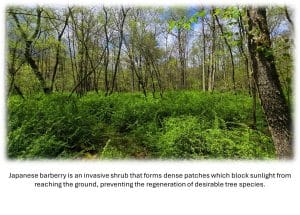
I remember standing on a harvest site early in my career, looking out over what should have been a healthy stand of hardwoods. Instead, it felt…off. The canopy was wide open in all the wrong ways. The ground was blanketed with invasive plants and shrubs instead of the next generation of hardwood saplings. What remained didn’t look like the beginning of a new forest—it looked like the end of one.
Since then, I’ve walked a lot of woods—different properties, different operations, and different approaches to forestry. And the biggest thing I’ve learned is this: not all forest management is the same.
What I’ve Seen Elsewhere
In many places, forestry gets reduced to a short-term equation: how much volume can we take, and how quickly can we take it?
That mindset shows up in subtle ways at first. Maybe it’s harvesting too many of the best trees all at once. Maybe it’s not thinking through what’s left behind. Maybe it’s skipping over the question of what the forest will look like 10, 20, or even 50 years from now.
I’ve seen sites where the focus was almost entirely on yield with very little attention paid to regeneration.
None of this is usually done with bad intentions. More often, it’s the result of thinking in shorter timelines—QUARTERS instead of DECADES, OUTPUTS instead of OUTCOMES.
But forests don’t operate on short timelines. They respond to care—or neglect—over generations.
How We Do It at Hickman Woods
At Hickman Woods, the approach starts from a different place: the understanding that we’re not just harvesting trees—we’re shaping what this forest will become long after we’re gone.
That mindset changes everything.
When I walk a stand here, I’m not just looking for what can be taken. I’m looking at the full picture. Which trees are thriving? Which ones are crowded out? Where is the next generation already starting to grow? WHAT DOES THIS FOREST NEED—not just today, but over time?
Instead of removing everything of value, we practice selective harvesting. That means choosing individual trees carefully—taking some, leaving others, and always thinking about how those decisions open up space and light for new growth.
You can start to see the difference not long after a harvest.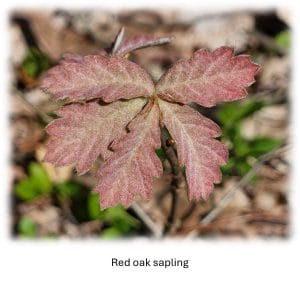
In a well-managed stand, sunlight reaches the forest floor in a balanced way. You’ll notice young trees coming up—oak, maple, hickory—each finding its place. The soil stays intact, protected by roots and leaf cover. It feels like a living system continuing forward, not something that’s been disrupted.
And that’s the goal. Not to pause the forest, but to GUIDE it.
We also think in longer timelines. The decisions we make today are meant to carry forward—improving the quality of the forest over decades, not just maximizing what we can get out of it right now.
Held to a Higher Standard
Another piece of this work that often goes unseen is accountability. Our timber stands are certified by the Forest Stewardship Council (FSC). That certification isn’t just a label—it means our work is regularly audited by an independent third party.
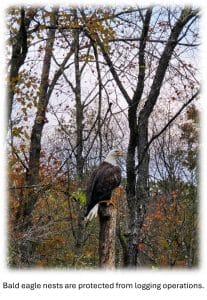
They don’t simply take our word for it. Auditors walk the ground, review our management plans, and make sure we’re following through on responsible forestry practices.
FSC is built around 10 core principles that guide how forests should be managed. These principles cover everything from protecting biodiversity and water resources to maintaining long-term forest productivity and respecting the broader ecosystem.
When we make decisions in the woods, those principles aren’t abstract—they’re something we’re expected to meet, consistently and transparently.
And for anyone who cares about where their wood comes from, it adds another level of trust. The practices behind the product aren’t just claimed—THEY’RE VERIFIED.
Walk the Woods With Me
If you were to walk a property with me, I probably wouldn’t start with technical terms or measurements.
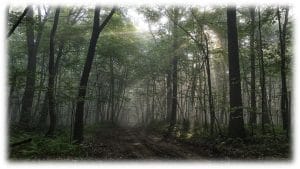
Instead, I’d point out the canopy—how it opens and closes, how light filters through different layers. Then we’d look at the understory. Are there young trees growing? Are they diverse? Do they have enough space and light to develop?
I’d show you how certain trees are marked for harvest—not simply because they’re the largest or most valuable today, but because removing them supports the overall health of the stand. Maybe they’re crowding others. Maybe they’re declining. Maybe taking them out gives a stronger tree nearby the opportunity to thrive.
Just as importantly, I’d show you what we choose to leave behind.
In a well-managed forest, nothing feels stripped or overdone. It feels BALANCED. There’s a rhythm to it— mature trees, younger growth, space to breathe, and clear signs of what’s coming next. Compare that to a poorly managed site, and the difference becomes clear, even if you can’t immediately explain why. One feels like it has a future. The other feels uncertain.
Why This Matters Beyond the Woods
The way a forest is managed shows up in ways that matter more than people realize.
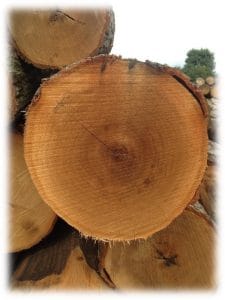
The quality of lumber—its strength, its consistency, even the way the grain looks—starts long before it reaches a mill. It BEGINS with how the tree GROWS.
Trees that develop in a well-managed forest tend to grow more steadily over time. Their growth rings are more consistent, which contributes to stronger, more stable wood. That consistency carries through into the final product.
It’s also about RELIABILITY. Responsible forestry leads to more consistent material, more dependable supply, and a kind of sustainability that isn’t just a label—it’s built into the process itself.
The Takeaway
Earth Day is a meaningful reminder that forestry is ultimately about LEGACY. The decisions we make today will shape the forests—and the products they provide—for years to come. It’s not about short-term gain, but about creating forests that will continue to grow, adapt, and provide value well into the future. By staying committed to responsible management and the principles of the FSC, Hickman’s continues to balance environmental stewardship with the production of high-quality wood products.
Because in the end, it’s not just about the trees we harvest—it’s about the forests we leave behind.